After the Rain: Post-Flood Inspection, Preventive Maintenance and Re-Greasing
After heavy rain or flooding, a truck, trailer, forklift, generator or loader can look completely dry on the outside while water is still trapped inside connectors, housings, brake components, bearings, air systems and lubricated joints. PAGASA's rainfall and thunderstorm advisories are a useful reminder that wet weather is not only a driving hazard — it is a maintenance event. Floodwater may carry silt, salt, fuel, sewage and other contaminants, so the cleaning and inspection that follows has to protect the people doing the work as much as the machine.
The safest approach is staged. Determine how high the water reached. Decide whether the unit may be started at all. Inspect and service the highest-risk systems. Only then run a controlled test. A rushed restart is what turns a manageable cleaning and lubrication job into engine, electrical, brake or bearing damage.
The immediate stop rule
If water may have reached the engine air intake, electronic control modules, the battery compartment, hybrid or high-voltage components, or the interior fuse and relay area, the unit is isolated. Ignition stays off. No start attempt until a qualified technician has assessed it. NHTSA's flood-damaged vehicle guidance is unambiguous on this, and hydrolock is not a risk worth taking to save a recovery fee.
1. Classify the exposure before touching the key
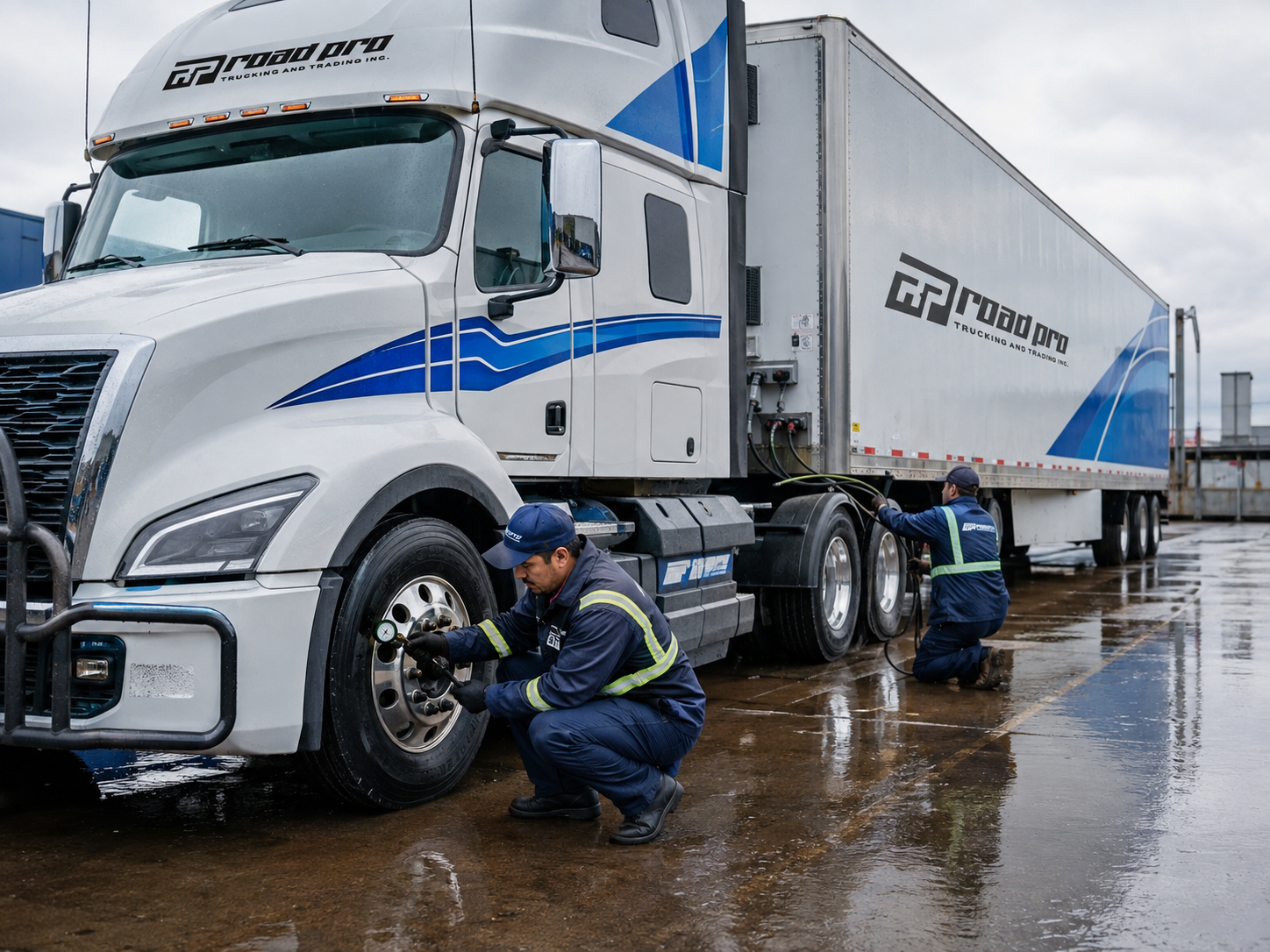
Level A — rain and road spray. The unit ran in heavy rain but never entered standing water. It gets an enhanced walkaround, brake response check, tire inspection and a review of lubrication points.
Level B — shallow flood contact. Water reached the lower tire, axle, brake or underbody area. Brakes, hubs, differentials, breathers, air lines, wiring clips and exposed grease points are inspected before release.
Level C — hub, chassis or low-component immersion. Water reached wheel hubs, transmission housings, starter, alternator, low connectors or hydraulic components. Fluids, bearings and electrical systems are treated as potentially contaminated and workshop inspection is mandatory.
Level D — intake, cab, engine or battery exposure. Do not start. Record the waterline, isolate the battery only if the manufacturer procedure allows it, and arrange recovery to a qualified workshop.
Written down as a sequence it looks bureaucratic; in practice it takes a few minutes and prevents the single most common post-flood mistake, which is starting first and investigating afterwards.
2. The high-priority inspection sequence
Engine and air intake: open the air-cleaner housing, inspect the filter and intake ducting, and look for moisture, mud or a visible waterline. Check the exhaust outlet and crankcase breather. Any evidence water entered the intake means no start.
Electrical and batteries: inspect batteries, terminals, fuse boxes, grounds, harness clips, sensors and connectors. Wet connectors are not forced apart without the correct procedure. Dry, clean and test — appearance alone proves nothing.
Fluids and filters: check engine oil, transmission fluid, axle and differential oil, hydraulic reservoirs, coolant and the fuel-water separator. Milky fluid, water beads, a raised level or sludge means draining, sampling or replacement before the unit works again.
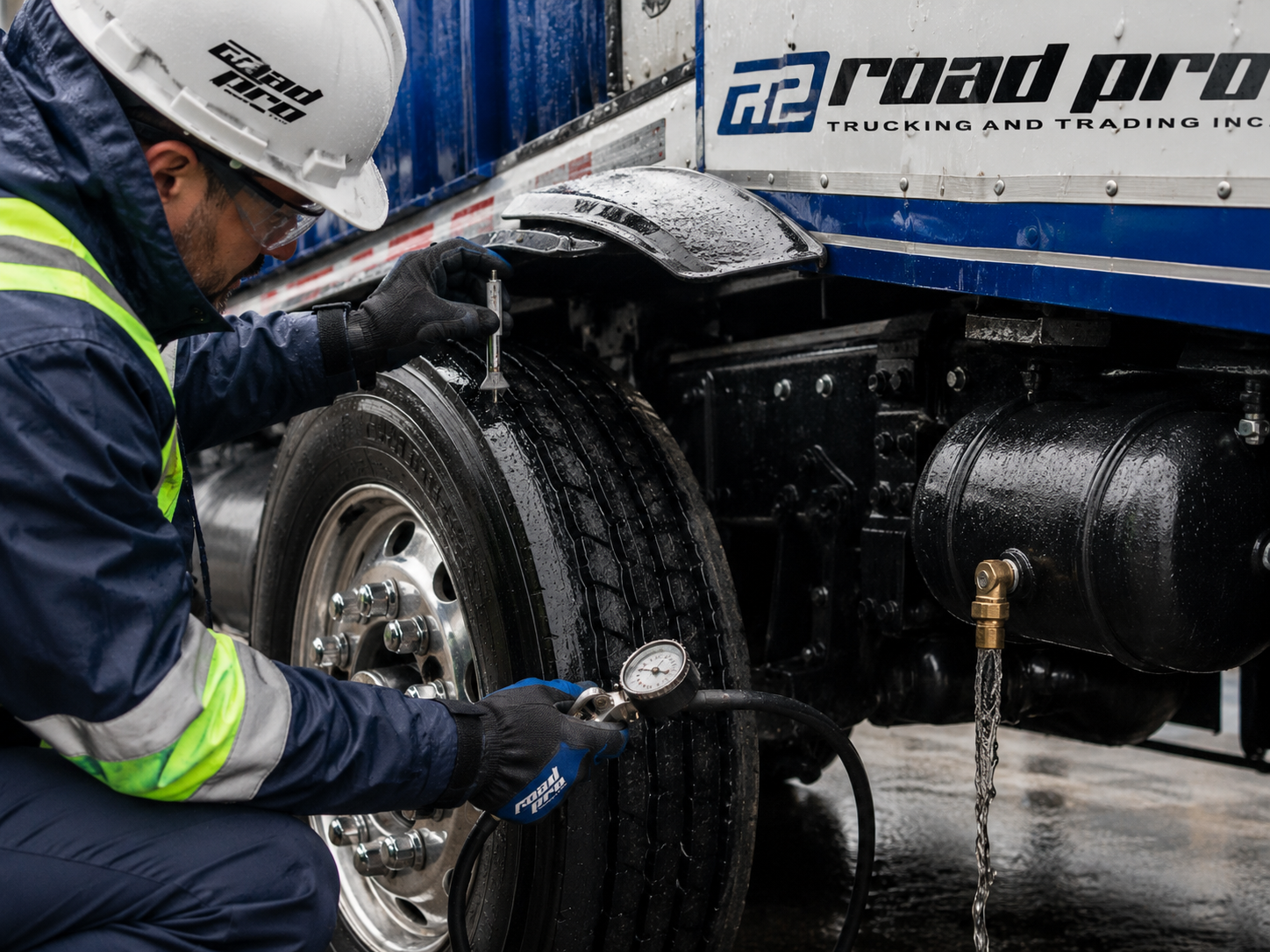
Brakes and ABS: inspect friction surfaces, drums or discs, chambers, hoses, ABS sensors and wiring, and remove packed mud and debris. Any warning lamp, delayed response, pulling, grinding or abnormal air loss is a no-release defect.
Hubs, tires and underbody: check hub seals, wheel ends, tire damage, valve stems, mud trapped between dual tires, steering joints, suspension bushes, cross-members and trailer connections, and look for impact damage from debris hidden under the water.
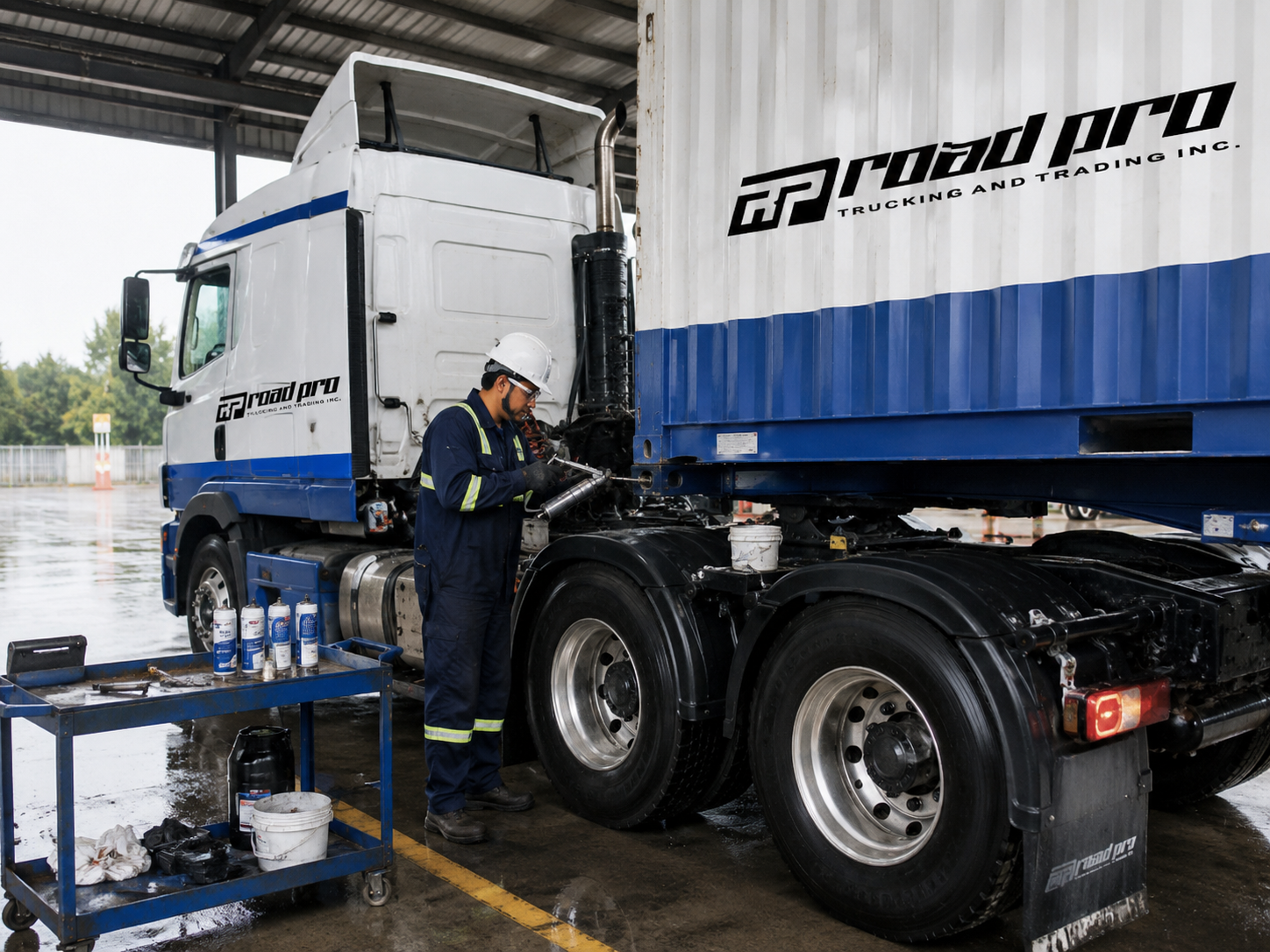
Grease points and joints: clean each fitting before applying grease. Where the manufacturer permits purging, continue only until clean grease appears. Use the specified grease, and avoid over-greasing sealed bearings or mixing incompatible products.
3. Preventive maintenance after water exposure
Cleaning has to remove contamination without driving water deeper into the unit. PPE matters here because floodwater can contain sewage, chemicals, fuel and biological contamination. We wash the exterior and undercarriage in a controlled area and keep high-pressure water away from breathers, bearing seals, electrical connectors, control modules and open filter housings.
Re-greasing is the step most often skipped and most often needed. Exposed pivots, kingpins, steering joints, suspension points, loader pins and attachment couplers are where water and silt displace or contaminate grease, raising friction and starting corrosion that shows up weeks later as play and wear. Wipe the fitting and surrounding surface first. Use the lubricant listed in the manual. If the joint purges, add grease slowly until clean lubricant appears, then remove the contaminated excess. If a fitting will not accept grease, do not simply increase pressure — the line, passage or fitting is likely blocked or damaged. Caterpillar's own maintenance guidance makes the same point about keeping fittings and hoses clean to prevent contamination.
Fluid condition deserves equal weight. Water enters through damaged seals, breathers and submerged housings. A visual check is useful but incomplete; where exposure was significant we sample and use laboratory fluid analysis, especially for engines, transmissions, axles and hydraulics. Caterpillar notes that fluid analysis identifies water, fuel, glycol and dirt that a visual inspection will miss entirely.
4. Controlled return to service
Road Pro decision aid: severity × likelihood, scored 1–25. An illustrative risk ranking, not measured failure-rate statistics.
Before start: confirm fluids are correct, the air intake is dry, batteries and connectors are safe, guards are installed, and no tools or absorbent materials are left in the unit. First start: only in a ventilated, controlled area, watching oil pressure, charging voltage, warning lamps, smoke, unusual noise and leaks — and stopping immediately if any reading is abnormal.
Static function test: steering, service brake, parking brake, transmission engagement, lights, horn, wipers, hydraulic functions and safety interlocks. Low-speed test: in a clear yard, checking brake response, pull, vibration, wheel-end temperature, steering centring and warning lamps. The unit does not enter traffic or load service until it passes. Follow-up: reinspect after the first shift or 50–100 km depending on the unit and manufacturer guidance, looking again for cloudy fluids, leaks, hot hubs, loose connections and recurring warning codes.
Release happens only when the inspection is documented, defects are closed, and the responsible fleet or workshop authority has signed the unit back into service. That signature is the point of the whole exercise — it makes recovery a decision somebody owns rather than an assumption.
Why we publish this
Rainy season in the Philippines is not an exception to plan around once; it is a third of the year. Carriers that treat flood exposure as a wash-and-go event pay for it in bearing failures, brake defects and electrical faults that arrive a month later with no obvious cause. Running the sequence above is slower on the day and considerably cheaper across a fleet. This guide supports, but does not replace, the manufacturer service manual, approved lubricants, workshop isolation procedures and applicable Philippine requirements.