Wet-Weather Safety Checks: Tires, Punctures, Air Tanks and Brakes Before Release
Heavy rain does not just make driving harder — it changes the defect profile of a working truck. Sharp debris hides in puddles, potholes deepen, tire pressures that were already marginal drop further, visibility falls, and moisture collects inside an air-brake system. A unit that finished yesterday's trip without a single warning lamp can still need a more deliberate pre-trip inspection this morning. That is the whole reason we run a separate wet-weather check at Road Pro: so the go/no-go decision is visible, documented, and made in the yard instead of on the shoulder of a flooded highway.
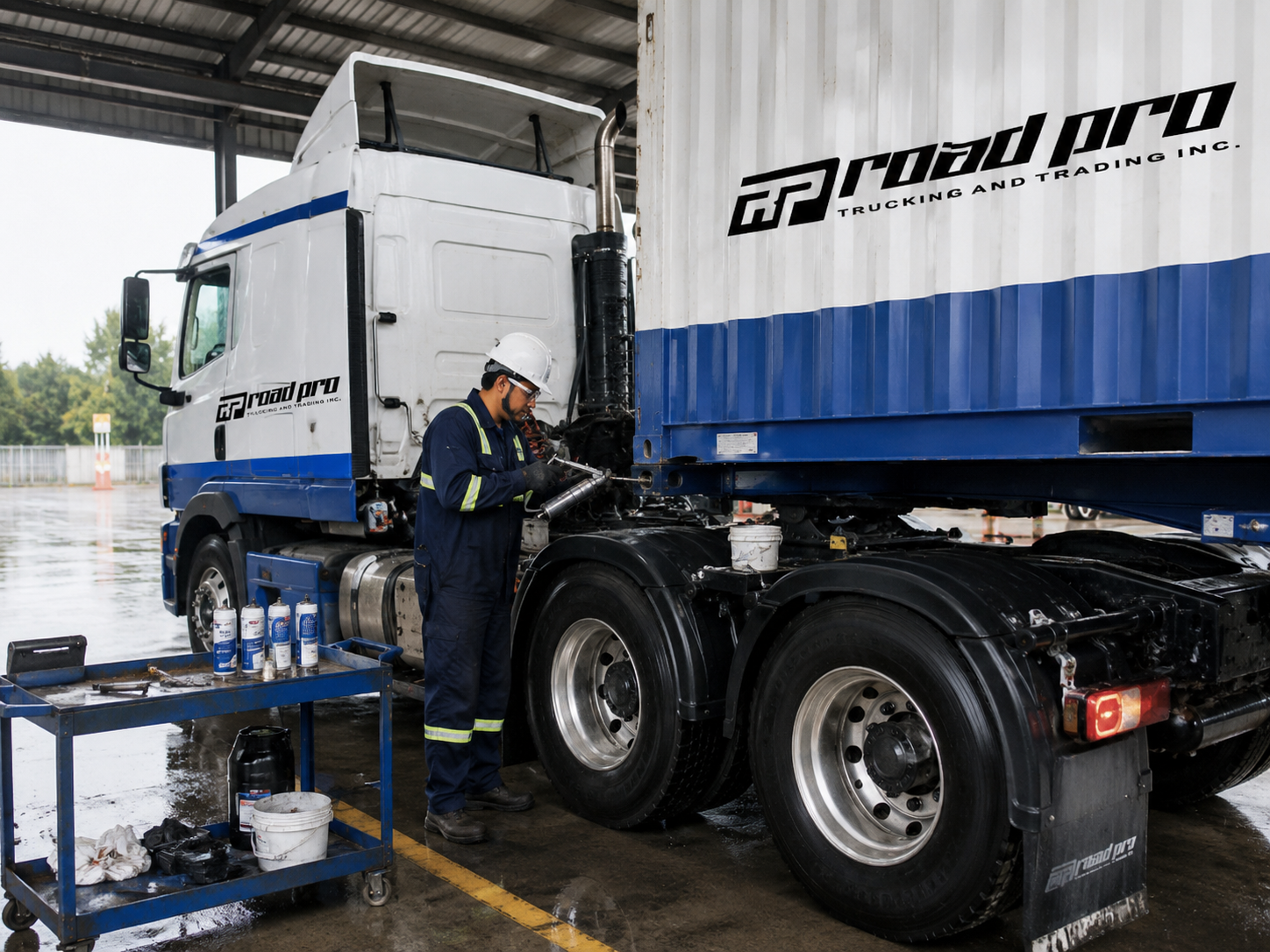
The check starts with the unit parked on level ground, parking brake applied, wheels secured where required, engine off for the physical walkaround, and enough light to actually see inner sidewalls and the underbody. Gloves on. Nobody wades into moving floodwater. PAGASA flood guidance and OSHA flood-recovery advice both make the same point: a flooded area is a changing, potentially contaminated environment, not just a wet one.
The release principle
A tire bulge, a sidewall cut, repeated pressure loss, a brake warning, a low-air warning, an audible air leak, damaged wheel hardware, or uncertain flood damage is not a monitor-during-the-trip item. It is a stop-and-repair item. Every driver on our fleet knows that dispatch will reassign the load rather than argue with the checklist, and that removes the quiet pressure that causes carriers to release marginal units to protect a delivery window.
1. Tires after rain and flooded-road exposure
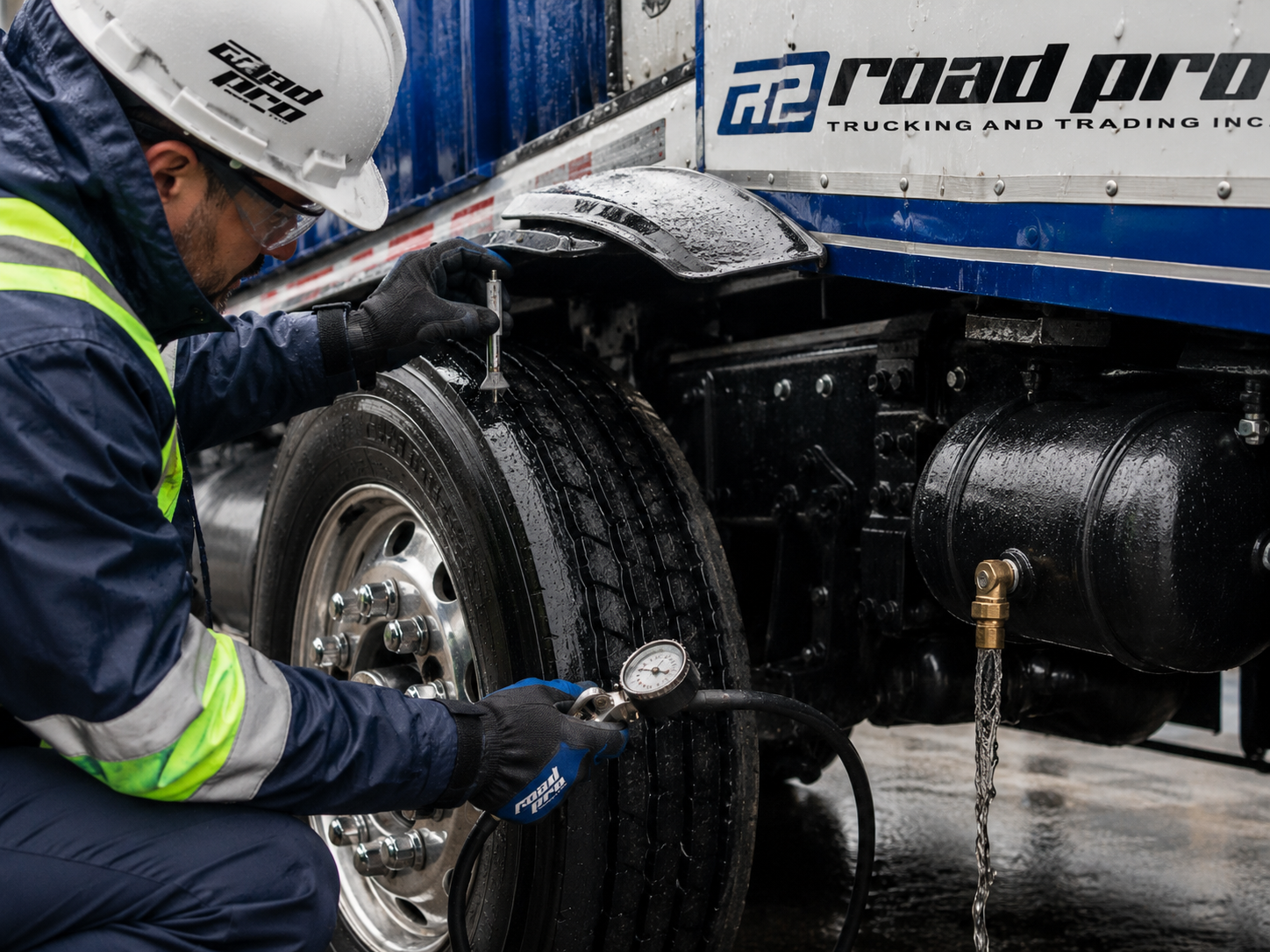
Pressure and tread come first. We measure pressure cold and compare it against the fleet specification for that axle, load and tire — every tire, including inner duals and the spare. Tread depth is checked with a gauge across the full width, not eyeballed from one shoulder.
Then punctures and embedded objects: nails, wire, glass, metal, stones and fresh cuts. Drivers do not pull an embedded object out on the roadside unless the approved repair process calls for it, because removal can turn a slow leak into rapid pressure loss far from help.
Sidewalls are inspected on both faces for cuts, exposed cords, impact bubbles, bulges, severe abrasion and cracking. A sidewall puncture or a bulge means removal from service and professional assessment — Michelin's own repair criteria treat sidewall damage as non-repairable, and we follow that. Repeated inflation without diagnosis is not a repair strategy: pressure loss can come from the puncture, the sidewall, the valve, the valve cap or the wheel itself, and only one of those is fixed by adding air.
Dual tires get particular attention. Trapped stones, mud and debris come out from between the tires. The pair has to be compatible in size and inflation. Inner sidewalls are inspected with a light and mirror, and contact marks are treated as evidence that spacing or pressure is wrong. Wheel nuts, studs, rims and hub seals are checked for movement, rust trails, cracks and fresh leakage.
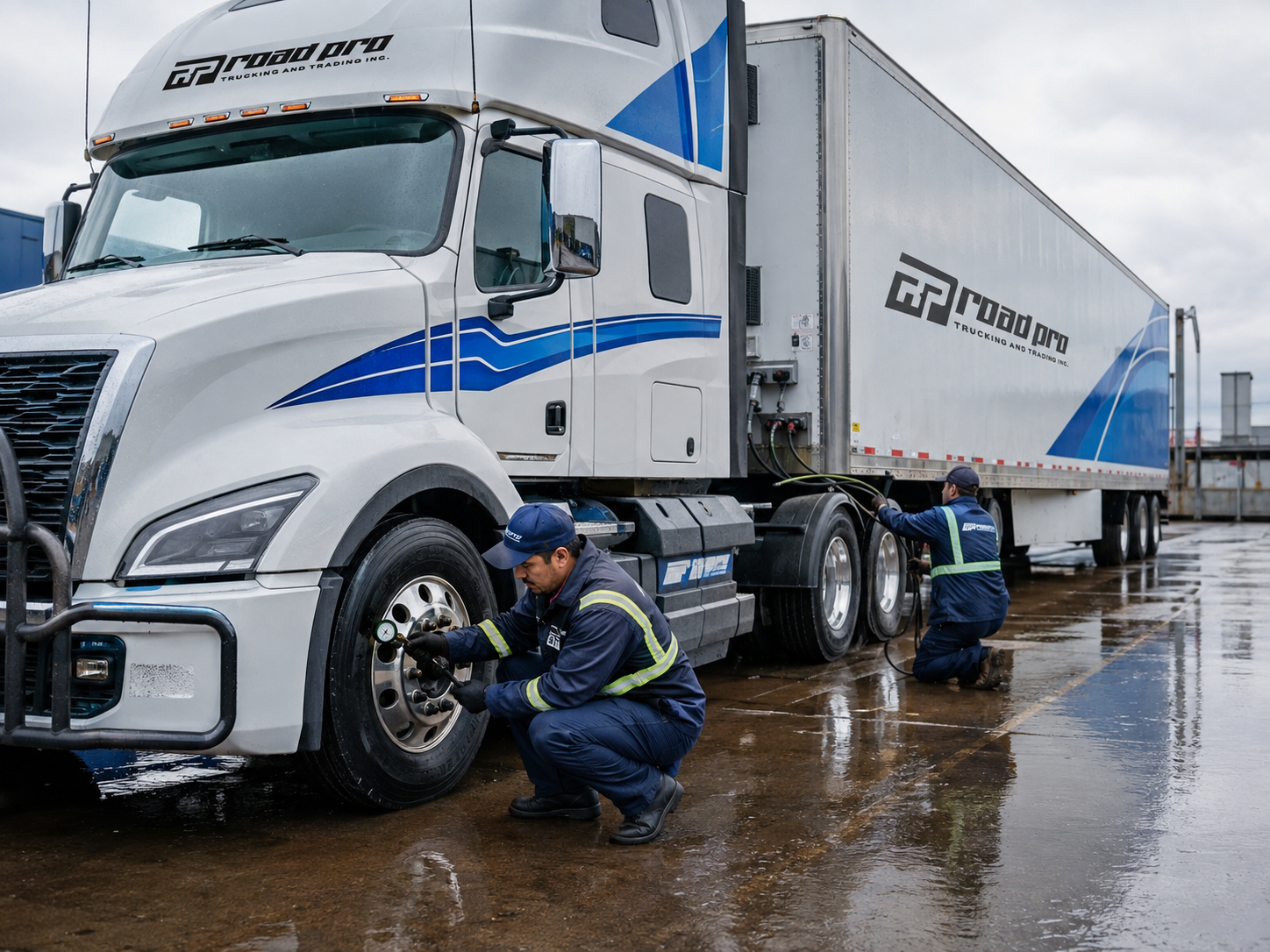
Visibility and splash control close out the tire stage: wiper blades, washer fluid, demisters, mirrors, cameras, lamps, reflectors and mudguards. Poor visibility is what makes a driver miss the debris and standing water in the first place.
2. Air tanks, moisture and brake-system integrity
Compressed-air systems produce moisture and can carry compressor oil. The FMCSA commercial driver manual is explicit that water and oil collect in the bottom of the air tanks and must be drained through the tank drains according to the system design. After prolonged rain, flood exposure or unusually humid service, what comes out of those drains is diagnostic information.
Clear moisture: record it and continue the full brake check. Repeated large quantities of water: inspect the air dryer and the drains. Heavy oil: inspect the compressor and air system. A frozen, damaged, blocked or non-discharging valve: remove the unit from service. Nobody crawls under an unsupported vehicle or works around pressurised components outside the approved isolation procedure.
Road Pro decision aid: severity × likelihood, scored 1–25. Any manufacturer limit, legal requirement or technician finding overrides this score.
System integrity is checked next — pressure build-up, low-pressure warning devices, governor cut-in and cut-out, parking brake, service brake, ABS lamps, and audible leaks. We hold a full service-brake application and watch the gauges against the limit that applies to that specific truck and trailer combination, not a generic number.
If friction brakes were only wetted by rain or shallow splash and everything else is sound, a controlled low-speed application in a clear yard helps confirm response and dry the surfaces. We stop immediately if the vehicle pulls, pedal response changes, stopping is delayed, an abnormal noise appears, or a lamp stays on. Brakes that were submerged, packed with mud or contaminated by oil go to the workshop — not through a few hard stops on a public road.
3. Defect priority when the decision is close
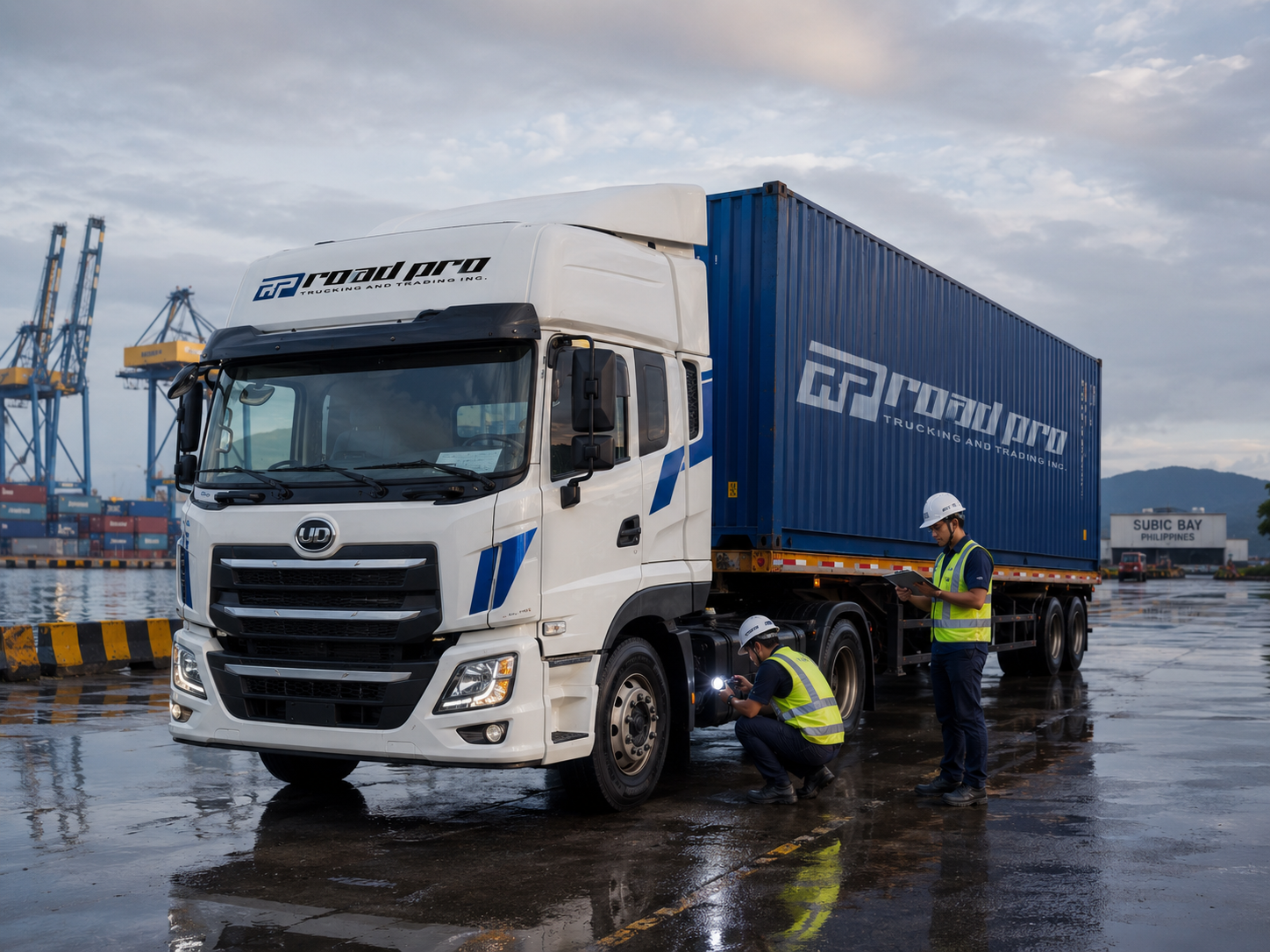
Most wet-weather calls are obvious. The ones that are not benefit from a ranking, so we score observable defects by severity against likelihood and act on the highest number first. Any manufacturer limit, legal requirement or qualified technician finding overrides the score.
4. The five-minute walkaround
The routine is deliberately short enough to survive a busy dispatch morning. Minute one: front and visibility — windshield, wipers, washer, lamps, mirrors, plate, loose panels, obvious leaks. Minute two: steer axle — cold pressure, tread, cuts, bulges, objects, wheel nuts, hub seal, steering joints. Minute three: drive axles and air system — dual spacing, inner sidewalls, mud and debris, hoses, chambers, reservoirs and drains. Minute four: trailer — tires, ABS cable, air lines, glad hands, coupling, landing gear, lamps and reflective tape. Minute five: cab test — warning lamps, pressure build, low-air warning, horn, and service and parking brake response.
5. Go, repair, or stop
GO means all pressures and tread meet the fleet standard, no cuts, bulges or leaks, air pressure builds normally, warning systems are clear, brakes respond evenly, lights and wipers work, and the inspection is recorded. REPAIR BEFORE NORMAL DISPATCH covers the small but real defects — a weak wiper blade, a damaged mudguard, a slow valve leak, a blocked drain, a questionable embedded object. Those get an owner and a deadline, not a shrug. STOP AND ISOLATE covers sidewall bulges or exposed cords, rapid or repeated pressure loss, a cracked rim or loose wheel hardware, a low-air warning, a reservoir or hose leak, brake pull or delayed response, an ABS or brake lamp that will not clear, floodwater that reached hubs or brake assemblies, and any driver concern that cannot be resolved during the check.
6. A defect report drivers will actually use
A report only helps if it is specific. We ask for the unit, trailer, tire position, axle, date, location and driver; the exact observation — "right rear outer drive tire loses 10 psi overnight," not "tire issue"; a close photo and a wider photo showing position; the action taken; and the closure — technician finding, repair, replacement, torque check, pressure, brake test and release authority.
Done consistently, the pre-trip check stops being paperwork and becomes maintenance history. It is how the workshop finds recurring pressure loss, water accumulation, air-dryer problems, wheel-end leaks and route-specific debris hazards while they are still cheap to fix. If you want the full checklist we hand our drivers in the rainy season, ask us and we will send it. This guide supports — it does not replace — the manufacturer manual, Philippine legal requirements, or qualified technician inspection.