Moving Project Cargo Across Luzon: What Oversized Freight Really Takes
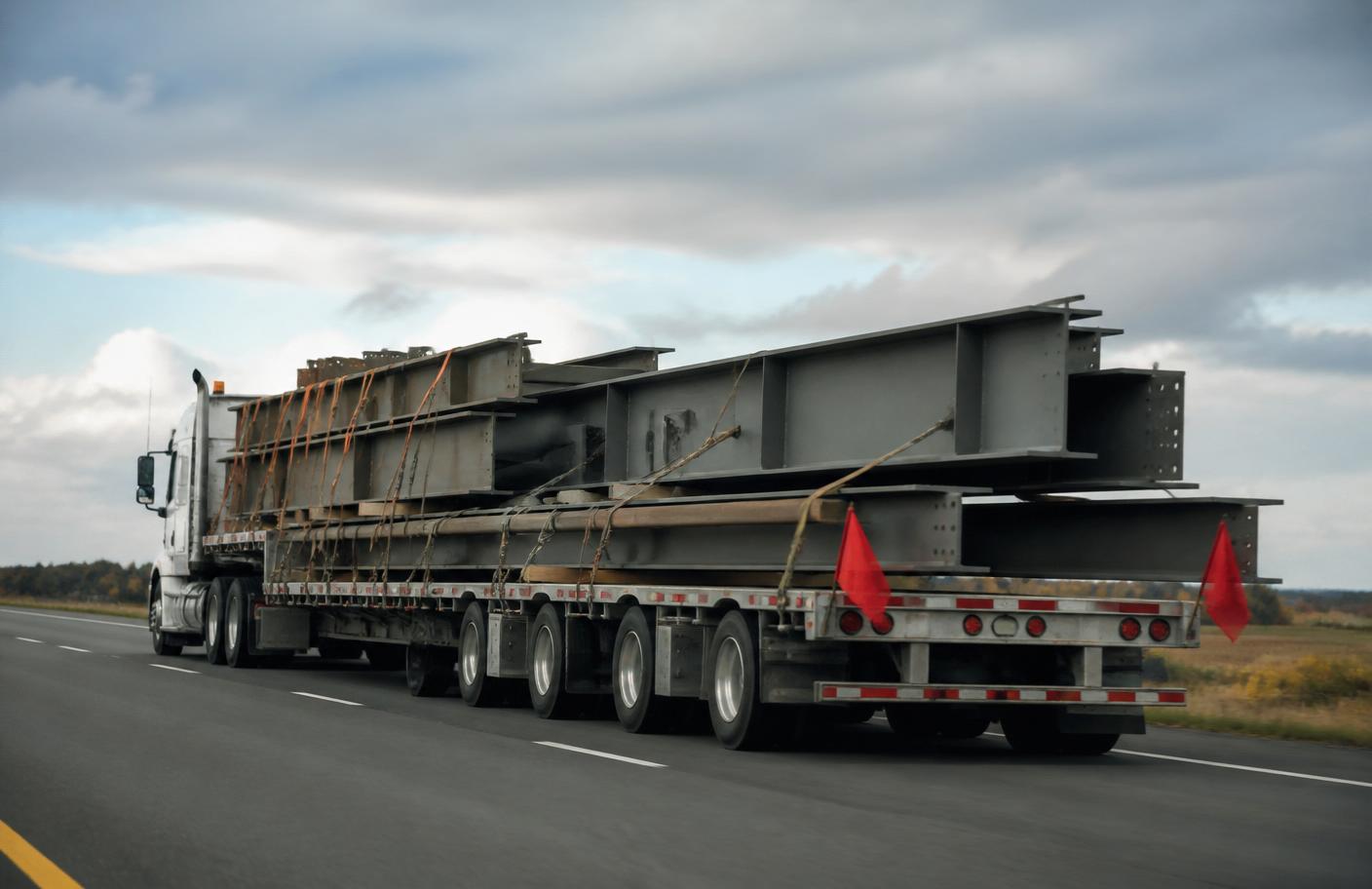
Project cargo is where logistics stops looking like trucking and starts looking like engineering. A transformer, a turbine section, a pressure vessel, or a run of structural steel does not simply need a bigger truck. It needs a route that physically accommodates it, a permit that legally allows it, a trailer configuration that carries it safely, and a plan that everybody involved has walked through before the wheels turn.
The survey comes first
Before we quote an oversized move we drive the route. Not on a map — on the road. The survey records overhead clearances, bridge ratings, turning radii at every junction, road camber, soft shoulders, utility lines, and the width of every gate and yard the load must pass through. A single low cable or an unrated bridge can invalidate an otherwise perfect plan, and finding it during the survey costs an afternoon. Finding it at 2am with a loaded lowbed costs the job.
The survey also determines timing. Many oversized moves run at night or in the early morning, when traffic exposure is lowest and coordination with local authorities is simplest. That decision has knock-on effects for crew scheduling, lighting, and escort availability, so it is made early.
Permits, escorts, and coordination
Oversized movements require permits from national and local authorities, and each has its own lead time and documentation. We manage those applications rather than passing them to the customer, because the permit conditions and the transport plan have to match exactly — a permit issued for one route and one axle configuration does not cover a plan that changed afterwards.
Pilot vehicles are briefed as part of the crew, not hired as an afterthought. They know the specific hazards identified in the survey, the planned stopping points, and the communication protocol with the driver. Where the route touches restricted zones or requires temporary traffic management, coordination with local authorities is arranged in advance.
Engineering the load
Representative schedule for a heavy transformer movement within Luzon.
The trailer is only one variable. Load securing, centre of gravity, ground clearance, overhang, axle loading, and lashing points are all calculated before dispatch, and the securing plan is documented. For very heavy or very tall items we model the transport as a system: the cargo, the trailer, the prime mover, and the road surface all behave together, and getting one of them wrong is enough.
Issues found during physical route surveys that would have stopped an unplanned move.
Lead time is the honest constraint
Customers are often surprised that the transport itself is the shortest phase of a project cargo job. The chart below shows a typical timeline for a heavy transformer move within Luzon. The move is one night. The preparation is three weeks.
Why we prepare this thoroughly
Project cargo failures are expensive in a way that ordinary freight failures are not. A damaged transformer is not a claim, it is a delayed power project. A load that cannot pass a junction at 3am does not simply arrive late — it blocks a road, involves authorities, and becomes somebody's incident report.
It is slower work than a standard freight lane, and it is exactly the kind of work we prepare for. If you have an oversized movement coming up, involve us at the planning stage rather than at the booking stage. The survey will tell you things about your route that are worth knowing before the equipment is even ordered.