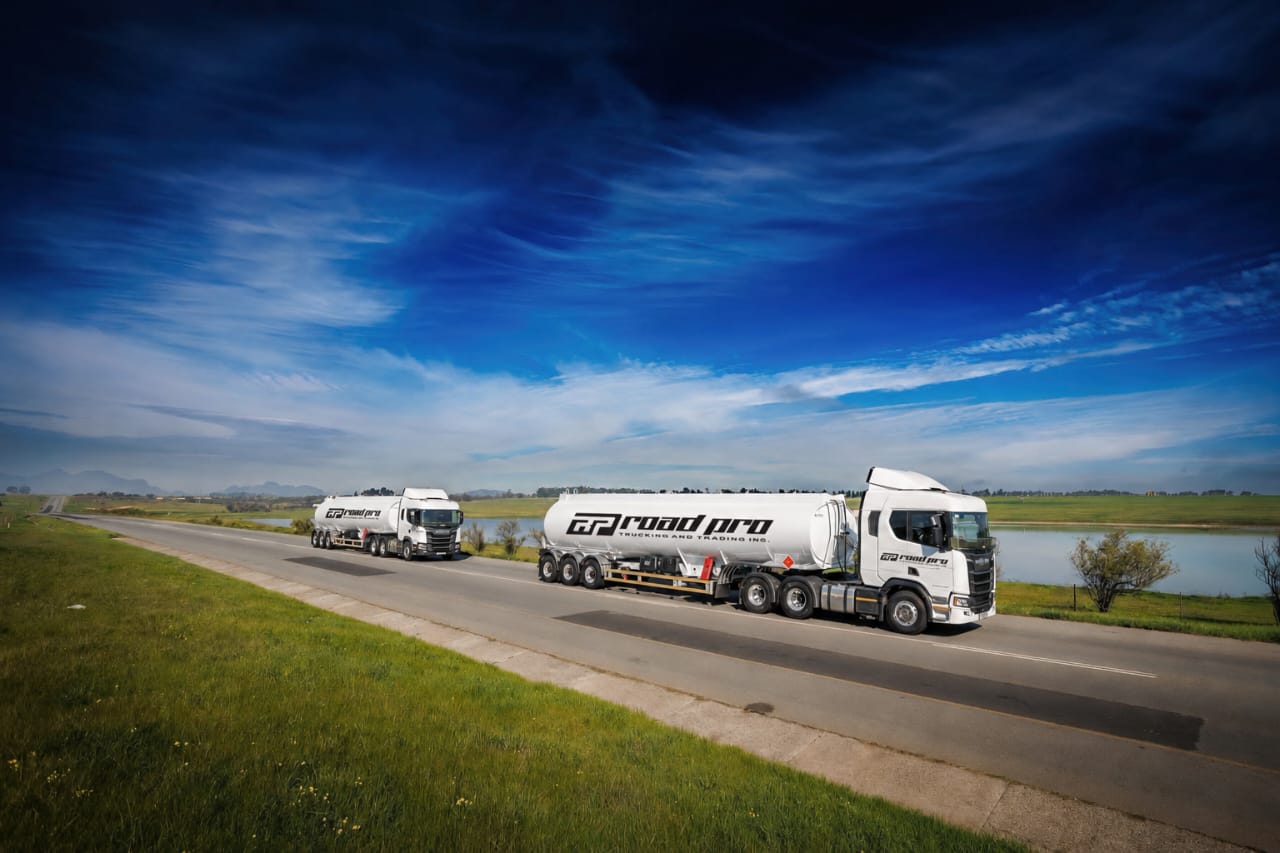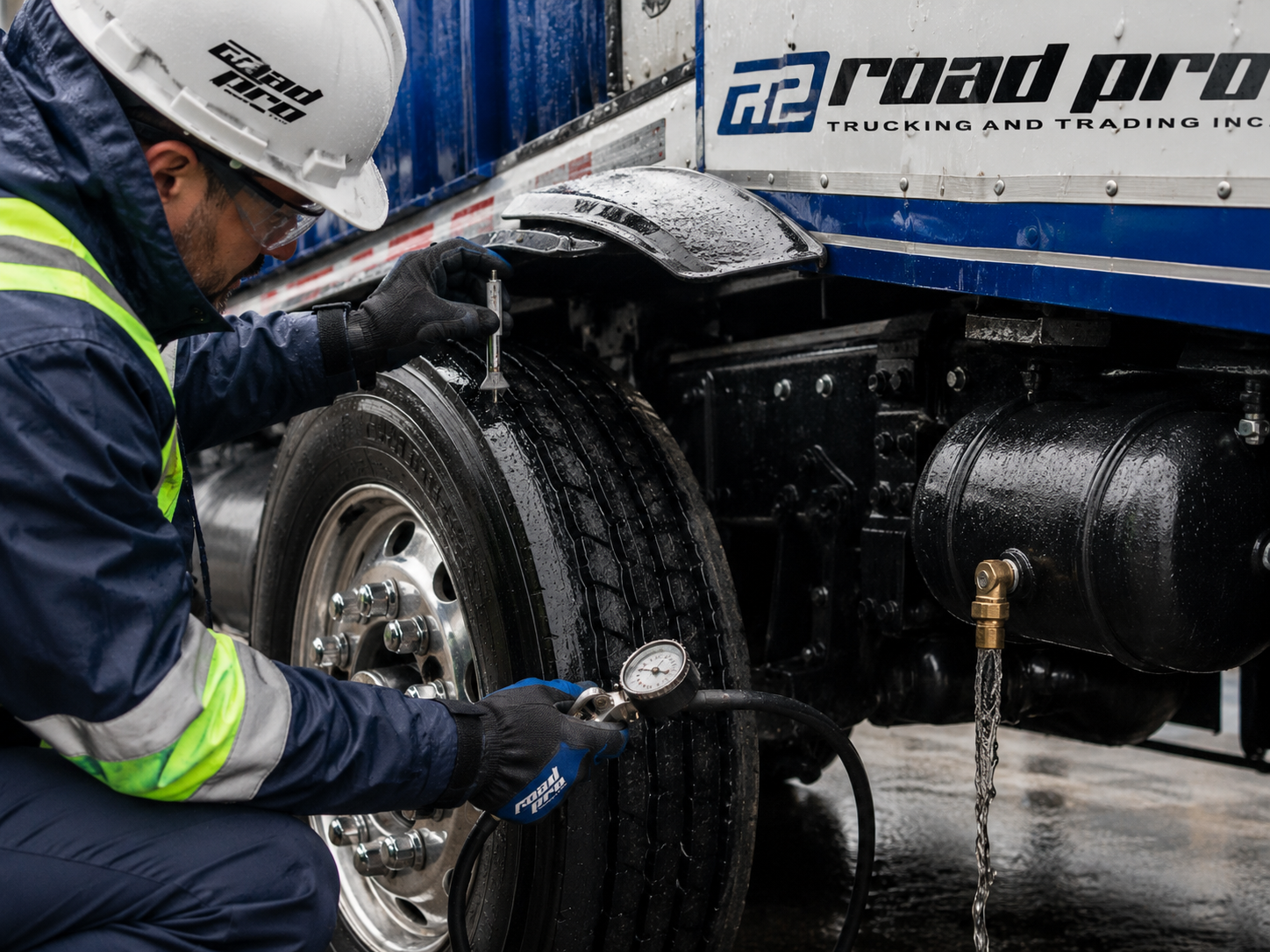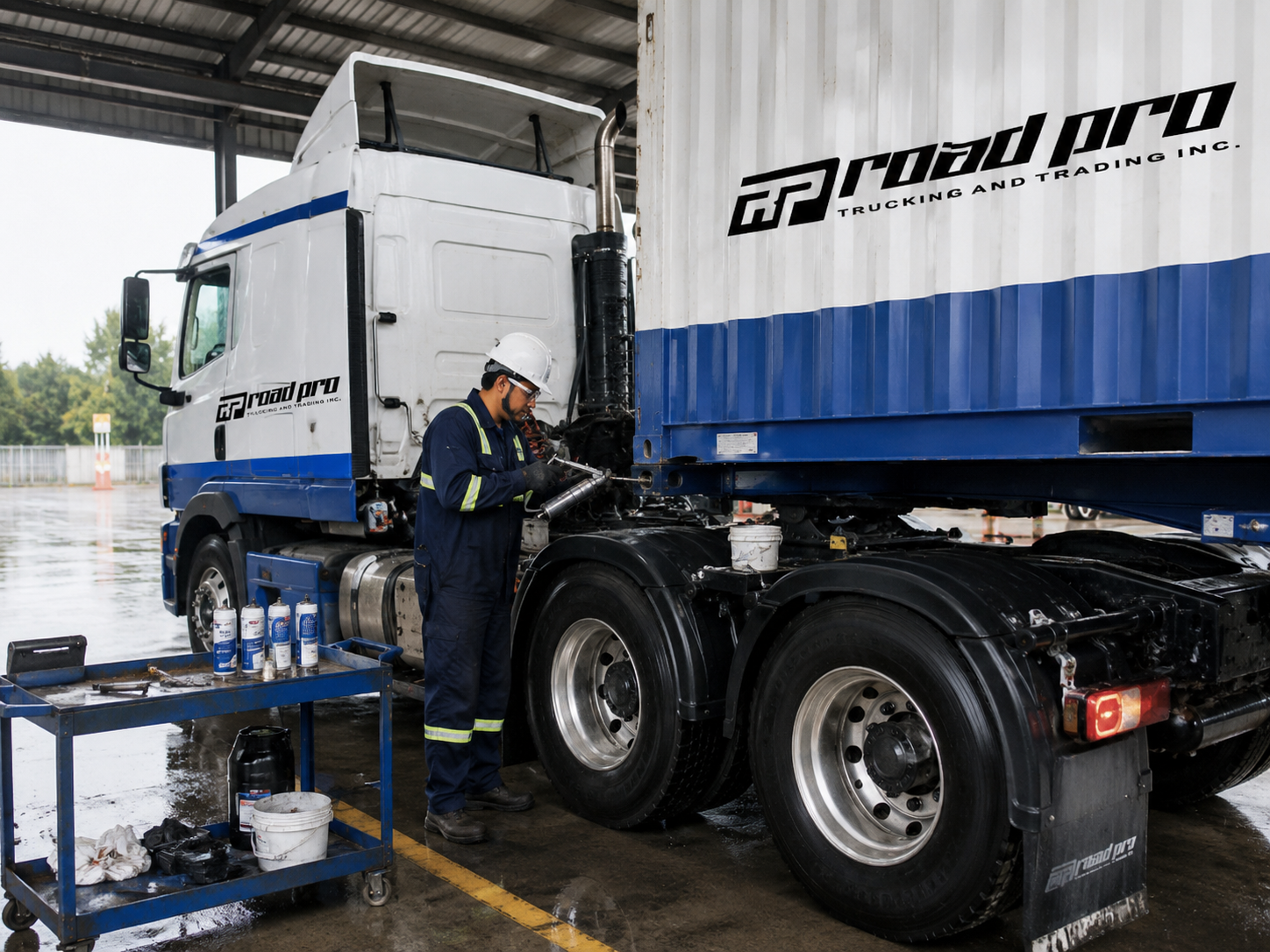
Every Road Pro truck and trailer is serviced by our own shop, by our own mechanics, on our own schedule. We chose that model early, and years later we still stand by it — because the alternative is trusting your uptime to somebody else's queue.
What outsourcing actually costs
On paper, outsourcing maintenance looks efficient. You pay for work when you need it, you carry no shop, no tools, and no mechanics on payroll. The cost that never appears on that comparison is waiting. A unit that needs a two-hour repair but sits three days in an external queue has not cost you two hours of labour; it has cost you three days of revenue and a customer who had to be told the truck is not coming.
Multiply that across a fleet and the arithmetic reverses. In-house maintenance is a fixed cost that buys a variable one: availability.
Preventive maintenance beats repair
Running our own shop lets us cycle preventive maintenance around dispatch instead of against it. Units are serviced in the gaps between jobs, not pulled out of a lane in an emergency. Our mechanics see the same trucks every week, so they notice the early signals — a bearing that sounds different, a hose beginning to weep, brake wear running ahead of schedule — long before those become roadside failures.
We also stock the parts our fleet actually consumes rather than what a general supplier keeps on hand. Filters, seals, brake components, and the wear items specific to our units are on the shelf, which is the difference between a same-day fix and a week of waiting for delivery.
Units ready to dispatch at start of shift, averaged over 12 months.
The numbers that justify it
From fault reported to unit released for dispatch.
The chart below compares our fleet's availability and downtime profile against what we experienced before consolidating maintenance in-house. The pattern is consistent: fewer unplanned breakdowns, shorter repair cycles, and far higher units-ready-to-dispatch each morning.
Accountability is the underrated benefit
When a unit rolls out, we know exactly what has been touched, by whom, and when. Every service is logged against the unit, and the driver's pre-trip inspection sheet feeds straight back to the mechanic who worked on it. If something is missed, we find out internally and fix the process — we do not spend a week arguing about it with a third party.
That accountability is also what our customers are indirectly buying. Compliance inspections, client site audits, and SBMA and LTFRB requirements are all easier to satisfy when the maintenance record is complete and immediately available.
The honest trade-off
It is not the cheapest line on the profit and loss statement. A shop, tools, spares, and skilled mechanics are real costs carried every month, whether the fleet is busy or not. We accept that, because the jobs finish on time — and in trucking, finishing on time is the entire product.
If uptime is a problem in your current operation, the maintenance model is usually where to look first.